
| ||||||||||||||||
| Category: Memoir |
(requires Adobe Reader)
|
| About the Book | |
|
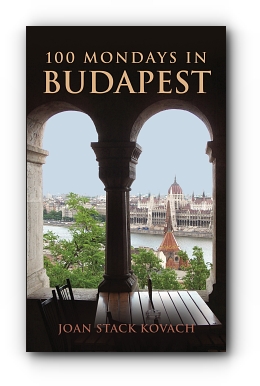
In the summer of 2000, an American family of three teenaged boys and their parents leave their sheltered New England town to fulfill a long nourished goal of living abroad for a while. They choose Hungary, the homeland of the paternal ancestors, a country recently liberated from decades of Soviet occupation and far less expensive than countries in Western Europe. It seemed like a good idea at the time. They pack personal items, things they think they will need or don't want to live without: the mom's fuzzy pink robe and favorite paring knife, the dad's hiking boots and poetry books. The boys ship their VHS videos, soccer cleats, lacrosse sticks, a Bob Marley poster, a Jamaican flag, an NSYNC poster, and a Sega Genesis console with games. The family doesn't realize there's more in their baggage. What they carry over the miles includes the pain of losses— the eldest's ability to work and earn some spending money, the middle son's lacrosse team and friends and the sport he loved playing, and the youngest son's tight group of friends. They carried with them the mom’s ridiculous but noble idea that if she is good enough, tries hard enough, she can keep her family connected and safe. And packed somewhere in the recesses of their belongings were the invisible consequences of the dad’s experience as a decorated Vietnam War combat veteran. All of this will prove to be a heavy load. They fly off to a city where they know no one. People speak an especially obtuse language they can’t understand. The cultural differences (last name said first, time told by how far it is to the next hour, and desserts, like cabbage and noodles with poppy seeds) are hard enough to absorb but prove less difficult than living with what is happening in the family. The parents' individual traumas resurface and the teenage sons continue their--perhaps normal but maybe exaggerated--growth and development. Maybe all this would have happened anyway, anywhere, but it happens in Budapest. The family stays two years. They enjoy the amazing fresh produce and meats for home cooking and restaurant meals at a fraction of the cost of prices in the USA. They attend bargain concerts of live classical music played by exquisite musicians who may be taxi drivers by day. Each of the sons finds his own path, be it returning to the U.S. to continue college studies, or engaging in the Hungarian rave music scene with weekend concerts that go until the wee hours. The dad continues his studies of Hungarian and begins to master the confabulating language. The rest of the family have nailed down the phrases they need to get by. But when they deliver the words they do know, with the pronunciation of native speakers, they consistently find they are deep into conversations they can't understand and have to admit "Nem értek magyarul." I don't understand Hungarian. They visit Rome and Austria, Tunisia and Romania and are in Hungary for the assault on the US on 9/11, all except for the one in New York that day. Each of them is on a separate journey of discovery and they grow apart despite needing to be together. They’re in Budapest for the opening of the House of Terror Museum and learn about Hungary's tortured history while living through a terrifying stage of their own family life. They search for long lost Varga and Kovach relatives into lands that were long lost from Hungary and are now part of Slovakia. Throughout the story our narrator copes with the demise of the expectations she once held for this experience, and faces her endless worries about the survival of her family. She finds friendships with kind and gentle fellow expats and supportive fellow writers who help her name and manage her fears. 100 Mondays in Budapest is a love story, a travel narrative, a mother’s memoir, and a meditation on how we manage what we have, what we fear, what we lose, and what we ultimately gain.
|
|
| About the Author | |
 |
Joan Stack Kovach is a nurse and writer. Her work has appeared in professional texts, essay collections, literary journals and for five years in the column “Activities of Daily Living.” She lives in Massachusetts and is working on a novel about a single mother in love with her chimney sweep. |